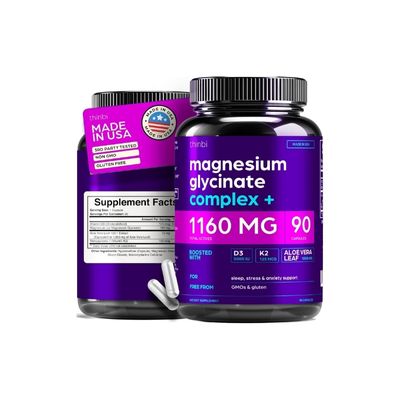

Finding wholesale distributors USA businesses can work with is only the first step. For resellers, the bigger challenge is choosing a distributor that offers reliable products, reasonable wholesale pricing, clear terms, and consistent inventory.
A distributor may have a large catalog and attractive prices, but that does not automatically make it a good fit for your business. Before placing a wholesale order, resellers should evaluate the supplier’s business information, product sourcing, minimum order requirements, shipping terms, documentation, and overall reliability.
For a broader look at sourcing options, see our guide to Wholesale Suppliers for Resellers.
What Is a Wholesale Distributor?
A wholesale distributor purchases or sources products and supplies them to retailers, resellers, and other businesses in larger quantities. Depending on the business model, a distributor may work with manufacturers, brands, or multiple product suppliers.
For a reseller, the distributor can become an important part of the supply chain.
A typical process can look like:
Manufacturer or Brand → Distributor → Reseller → Customer
The important point is that resellers should evaluate the distributor rather than choosing one based only on price.
Why Resellers Should Vet a Wholesale Distributor
Choosing the wrong supplier can create problems long after the initial order has been placed. A low wholesale price is not useful if the products arrive late, inventory becomes unavailable, or the supplier cannot provide proper purchasing documentation.
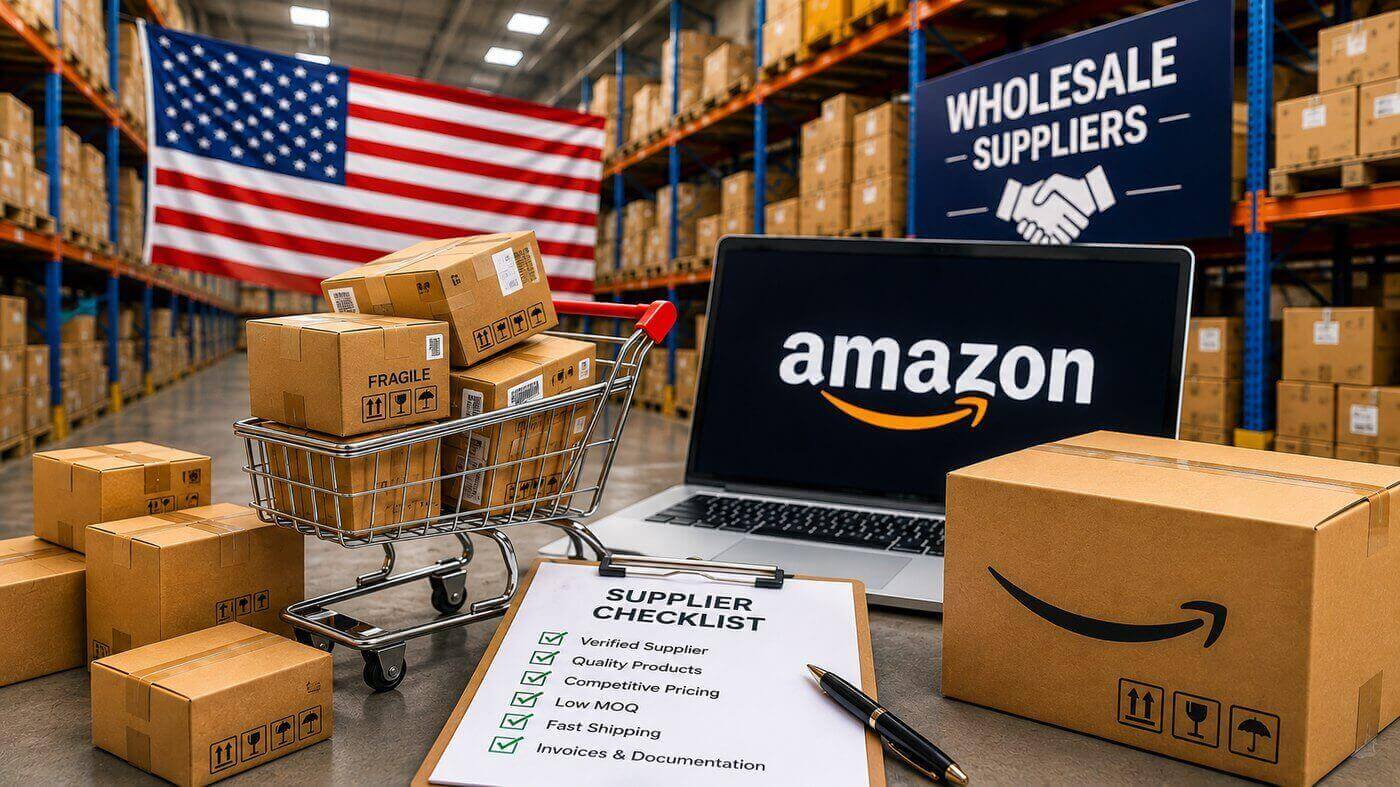
Before choosing a distributor, consider:
- Product quality and consistency
- Wholesale pricing
- Minimum order quantity
- Product availability
- Shipping costs and delivery times
- Return and damaged-product policies
- Payment terms
- Business contact information
- Product documentation
- Brand and product sourcing information
- Ability to maintain inventory over time
For Amazon-focused businesses, product eligibility, invoices, account requirements, and marketplace rules may also need additional consideration. Sellers specifically working with Amazon can also review Amazon FBA Wholesale Distributors when evaluating their sourcing options.
How to Verify a Wholesale Distributor in the USA
A professional supplier evaluation should start with basic business verification.
Check the Business Information
Look for clear and consistent information across the distributor’s website and business communications.
Check whether the distributor provides:
- A real business name
- Business address
- Working phone number
- Professional business email
- Product or company website
- Clear contact information
- Wholesale account information
If basic business information is difficult to verify, that is a reason to slow down before placing a large order.
Review the Product Catalog
A legitimate distributor should provide enough product information for a reseller to understand what they are actually buying.
Review:
- Product names and descriptions
- Available brands and categories
- Product quantities
- Case-pack information
- Wholesale prices
- Current inventory
- Ordering requirements
- Product documentation
Do not judge a distributor only by the size of its catalog. A smaller catalog with reliable inventory can be more useful than thousands of products that are frequently unavailable.
Evaluate Product and Brand Relationships
For branded products, resellers should pay attention to where the products come from and whether the distributor can provide appropriate purchasing documentation.
Look for:
- Clear product sourcing information
- Consistent company and brand information
- Proper invoices
- Documentation related to purchases
- Clear explanations of the distributor’s supply relationships
The goal is not simply to find a company calling itself a distributor. The goal is to establish whether the supply chain is reliable and traceable.
How to Compare Wholesale Distributors
Once you have identified several potential suppliers, compare them using the same criteria.
- Pricing: Compare the actual wholesale cost rather than the advertised starting price.
- MOQ: Check the minimum order quantity and case-pack requirements.
- Inventory: Determine whether products are consistently available.
- Shipping: Review shipping costs, delivery times, and fulfillment options.
- Returns: Understand the conditions for returns, damaged products, and incorrect shipments.
- Documentation: Confirm what purchasing documents are provided.
- Payment: Review accepted payment methods and payment terms.
- Communication: Evaluate how quickly and clearly the supplier responds.
- Product selection: Check whether the catalog fits your target market.
- Replenishment: Consider whether you can reorder successful products consistently.
This comparison makes it easier to identify the distributor that fits your business rather than simply choosing the cheapest option.
Wholesale Pricing, MOQ and Profit Margins
Wholesale pricing should always be evaluated together with the other costs involved in selling a product.
A simple calculation is:
Wholesale Cost + Shipping + Other Business Costs = Total Product Cost
Then compare the total cost with your expected selling price.
A supplier offering a very low unit price may still produce a weaker margin if shipping is expensive, the MOQ is too high, or the products have a high return rate.
For new resellers, a manageable MOQ can also be important because it reduces the amount of capital tied up in inventory.
Red Flags to Watch for When Choosing a Distributor
Some warning signs deserve additional attention before you place an order.
Be cautious when a supplier:
- Provides unclear business information
- Uses inconsistent company names or addresses
- Avoids questions about product sourcing
- Cannot explain wholesale terms clearly
- Offers unusually low prices without a reasonable explanation
- Pressures you into a very large first order
- Has unclear payment or return terms
- Provides poor or inconsistent communication
- Cannot provide appropriate purchasing documentation
- Has unreliable inventory information
One warning sign does not automatically prove that a supplier is fraudulent. However, several warning signs together should make you investigate further before committing money.
Choosing a Distributor for Your Reselling Business
The right distributor depends on your business model, budget, product category, and expected order volume.
For New Resellers
New businesses may benefit from:
- Lower minimum order quantities
- Straightforward ordering terms
- Manageable starting orders
- Clear product information
- Reliable customer support
For Established Resellers
Larger businesses may prioritize:
- Better volume pricing
- Consistent inventory
- Larger product catalogs
- Reliable replenishment
- Efficient shipping
- Long-term supplier relationships
For Branded Products
Businesses selling branded products should pay particular attention to:
- Product sourcing
- Purchasing documentation
- Brand relationships
- Invoice quality
- Supply-chain consistency
How to Open a Wholesale Account
After selecting a potential distributor, the next step is usually opening a wholesale account.
The process may involve:
- Providing business information
- Completing a wholesale application
- Reviewing account requirements
- Providing requested business documents
- Reviewing the product catalog
- Checking wholesale pricing
- Understanding MOQ and payment terms
- Placing an initial order
Do not rush directly into a large purchase. A smaller initial order can help you evaluate product quality, shipping, communication, and fulfillment before scaling.
Wholesale Distributor vs. Wholesale Marketplace
A wholesale distributor and a wholesale marketplace can both help businesses source products, but the experience can be different.
Wholesale Distributor
- Direct supplier relationship
- Ongoing account relationship
- Specific product catalog
- Potential for repeat ordering
- Direct communication with the supplier
Wholesale Marketplace
- Multiple suppliers in one platform
- Broader supplier discovery
- Different pricing and terms
- Platform-based communication
- More options for comparing suppliers
The better option depends on whether you are looking for a long-term supplier relationship or simply comparing multiple sourcing opportunities.
How to Choose the Right Wholesale Distributor
The cheapest supplier is not necessarily the best supplier.
A better decision should consider:
- Product quality
- Total cost
- MOQ
- Inventory reliability
- Shipping
- Documentation
- Return terms
- Communication
- Replenishment potential
- Fit with your target customers
For resellers, supplier selection is ultimately a business decision. The distributor should be able to support the products, margins, order volume, and purchasing requirements of the business over time.
FAQs
How do you vet a wholesale distributor?
Check the distributor’s business information, product sourcing, pricing, MOQ, documentation, shipping terms, inventory availability, and return policy before placing an order.
What should I check before choosing a wholesale distributor?
Review product quality, wholesale pricing, minimum order requirements, supplier documentation, shipping costs, payment terms, inventory availability, and customer support.
How can I verify a wholesale supplier?
Verify the company’s business information, contact details, product sourcing, invoices, brand relationships, and wholesale account requirements before making a large purchase.
What is a good MOQ for a new reseller?
A good MOQ is one that fits your available budget and allows you to test the products without tying up too much capital in inventory.
Are the cheapest wholesale distributors always the best?
No. The lowest price does not guarantee reliable inventory, quality products, proper documentation, or consistent shipping. Total cost and supplier reliability matter more.
What documents should I request from a wholesale distributor?
Depending on the supplier and products, request appropriate invoices, product documentation, business information, and any relevant authorization or sourcing documentation before purchasing.
Can wholesale distributors support long-term reselling?
Yes. A suitable distributor can support long-term reselling when it provides consistent inventory, reliable replenishment, competitive pricing, clear documentation, and dependable communication.
Final Takeaway
Finding wholesale distributors USA businesses can work with is only the beginning. The stronger approach is to verify the supplier, compare pricing and terms, review documentation, evaluate inventory, and start with a manageable order before scaling.
If you are building a broader wholesale sourcing strategy, continue with our Wholesale Suppliers for Resellers guide and use it alongside your distributor evaluation process.